
Give any agent something real to work on
DCI AI Training hosts the Model Context Protocol servers your classes and your demos need. You
write one declarative definition — a server.yaml and its sample data — upload it
and press Publish, and a working MCP server is live at a URL. Everyone who connects to it gets
their own private copy of the data. No code. No build. No deploy.
An agent is only as convincing as what it can touch
That is as true of an exercise as it is of a demo in front of a prospect, and real systems are the wrong answer to both. They need credentials, they hold real data, and thirty people writing to one of them at once is a bad afternoon. So somebody writes a throwaway API instead: code, a deploy, and a service to maintain — one per scenario, and one that does not survive its author moving on.
This platform removes the code. Nothing is compiled and nothing is deployed: the definition is the server.
Three things that make it hold up in front of people
-
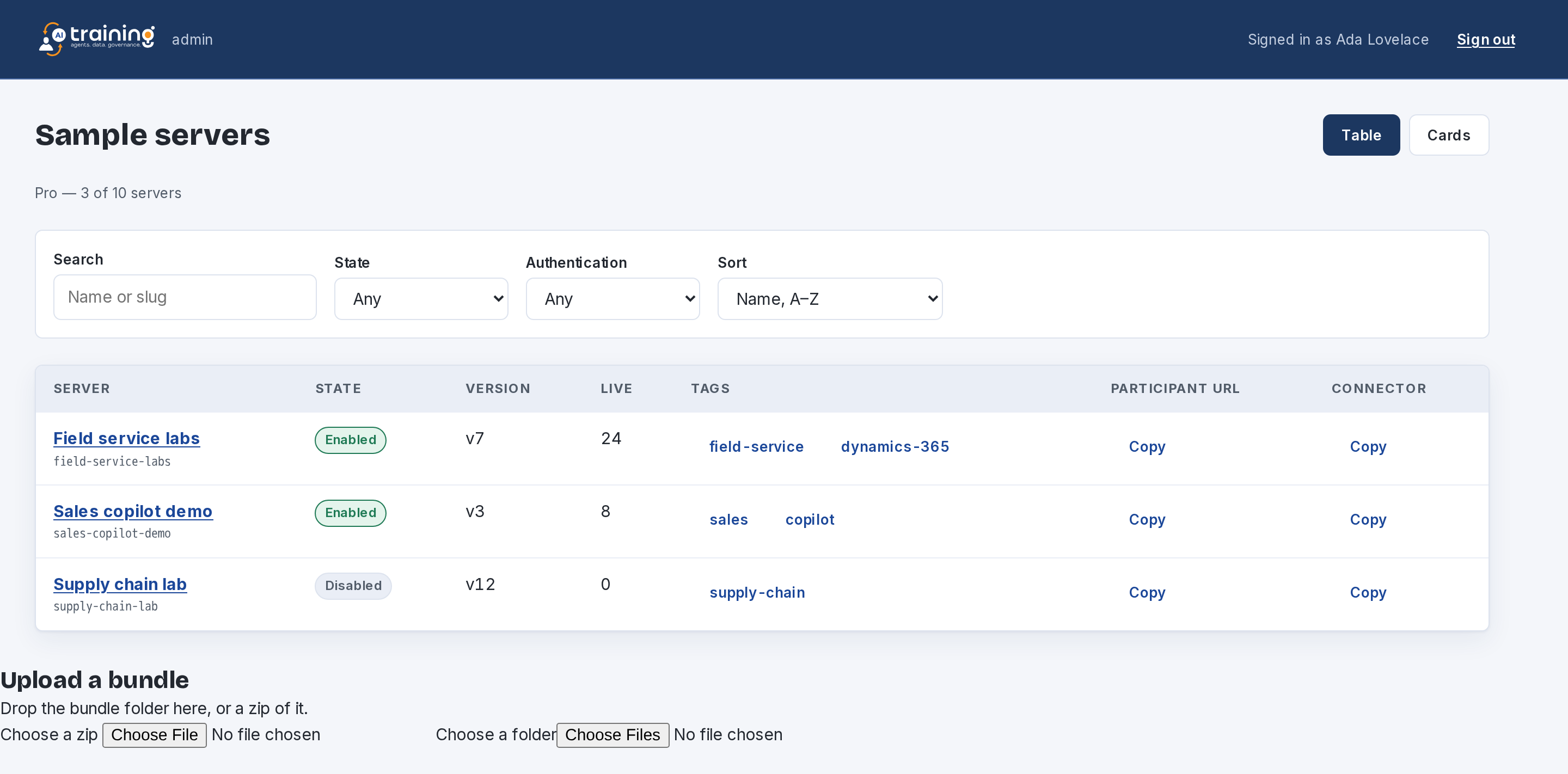
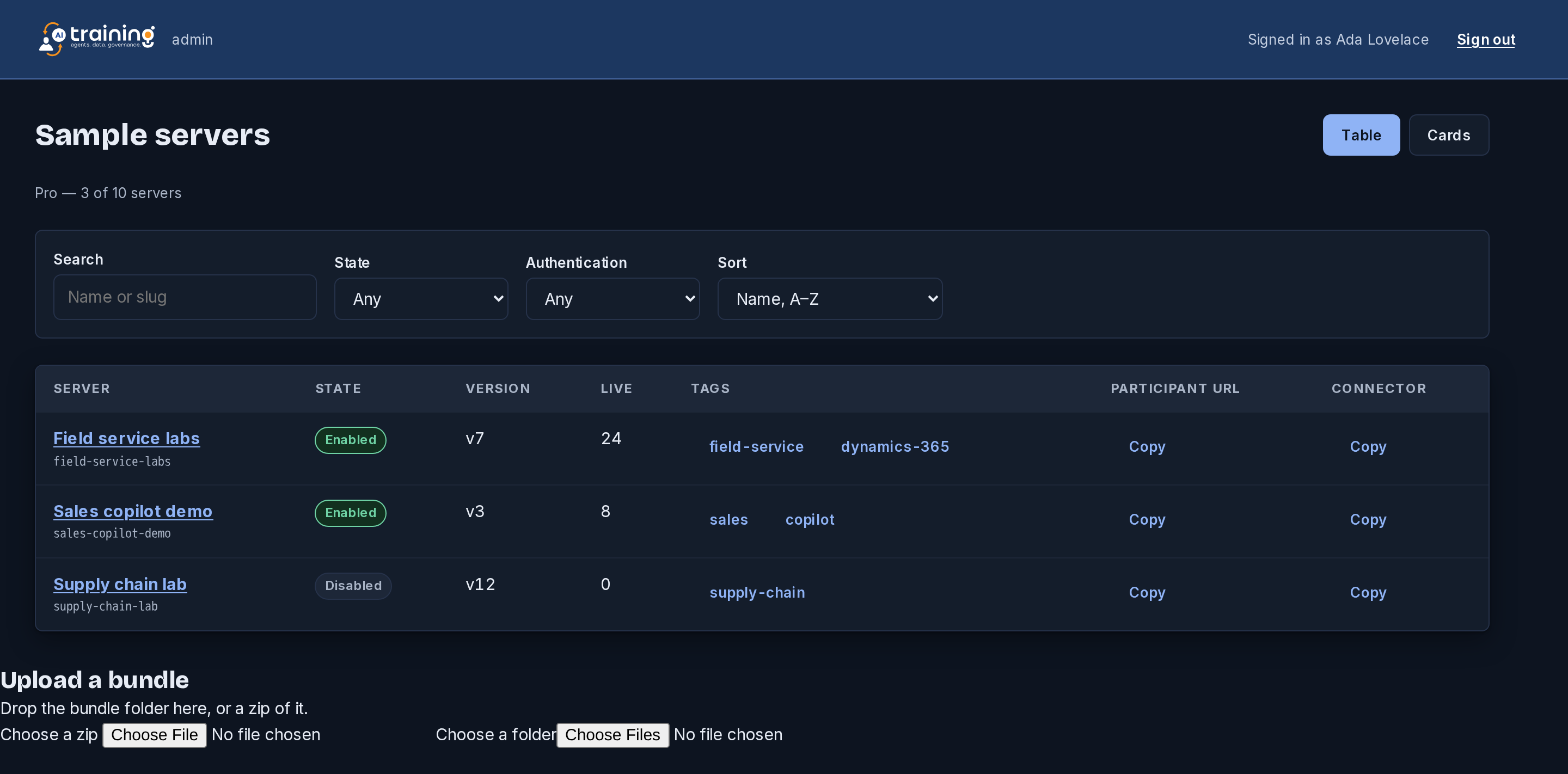
A sample server is a definition, not a deployment
One folder —
server.yamlplus the data it references — declares the entities, the tools and the closed set of verbs those tools use. Adding an MCP server is an upload. -
One URL, one private world each
Everyone is handed the same URL. A client that arrives without a session id is given a fresh one, and each session is a copy-on-write world — so one person's changes never reach anyone else's. A client that keeps sending the same id keeps the world it has changed, and Reset is the control that clears them.
-
A Copilot Studio connector, generated
Each server also serves a custom-connector document built from the same definition the host runs, so a session that uses Copilot Studio does not need a second thing to keep in step.
Who it is for
-
Trainers and content designers
A realistic tool surface for an exercise, without writing and hosting a service for it.
-
Solutions engineers and architects
An agent that really calls tools and really changes records, over data you chose. Starting the next run clean is one control — Reset — because a client that holds on to its session id holds on to the world it has been changing.
-
Whoever runs the room
A live view of what is on air and how many sessions are running, and — per session — exactly what those tool calls have changed, without touching the work to find out.
-
Everyone who connects
A URL, and nothing else. Sample servers are served anonymously, because the fastest start is the one that works.
Why it is worth paying for
Because the failure this prevents is expensive and public. Before anything goes live, the platform runs every tool in the bundle once against the bundle's own data and shows you the real response — which catches “it is broken” at 9 a.m. on your own screen rather than at 9:05 in front of the room.
Publishing never overwrites: it adds an immutable version and moves a pointer, so a rollback is a click rather than an incident. When you are done you switch the server off. Nothing is deleted — switching it back on brings the same server back at the same version, next term or next quarter.